
Adoption Safety
Dog Adoption in South Africa: A Practical Owner Guide
Dog adoption should match a real dog to a household that can meet that dog's welfare, health, behaviour, and daily needs. South African SPCAs, shelters, foster networks, and rescue organisations do not all use the same process, so verify the individual organisation's requirements while slowing the decision down enough to assess the long-term fit.
Quick takeaways
Decide whether adoption fits the household
Adult dog or puppy
Questions that reveal the real match
| Question | Why it matters | What to ask the rescue |
|---|---|---|
| What is the dog's typical energy and recovery after activity? | Exercise needs affect time, housing, walking, and behaviour. | What daily routine works now, and what happens when the dog is under-stimulated or overtired? |
| How does the dog respond to adults and children? | Friendly in one setting does not guarantee comfort with every interaction. | Which ages and situations have been observed, and what boundaries are recommended? |
| What is known about dogs, cats, and other animals? | Introductions and prey drive can affect safety. | Has there been a controlled meet, foster-home observation, or only an assumption? |
| What behaviour history is known? | Fear, separation distress, guarding, handling sensitivity, and reactivity need planning. | What triggers, warning signs, management, and professional support have helped? |
| What medical and preventive care is recorded? | Vaccines, sterilisation, microchip, parasites, medicine, and chronic conditions affect immediate care and costs. | Which records will be provided, and what follow-up remains? |
| What happens if the match is unsafe or unsuitable? | Early support can prevent abandonment or escalation. | Who should be contacted, what return process applies, and is a trial or foster-to-adopt period offered? |
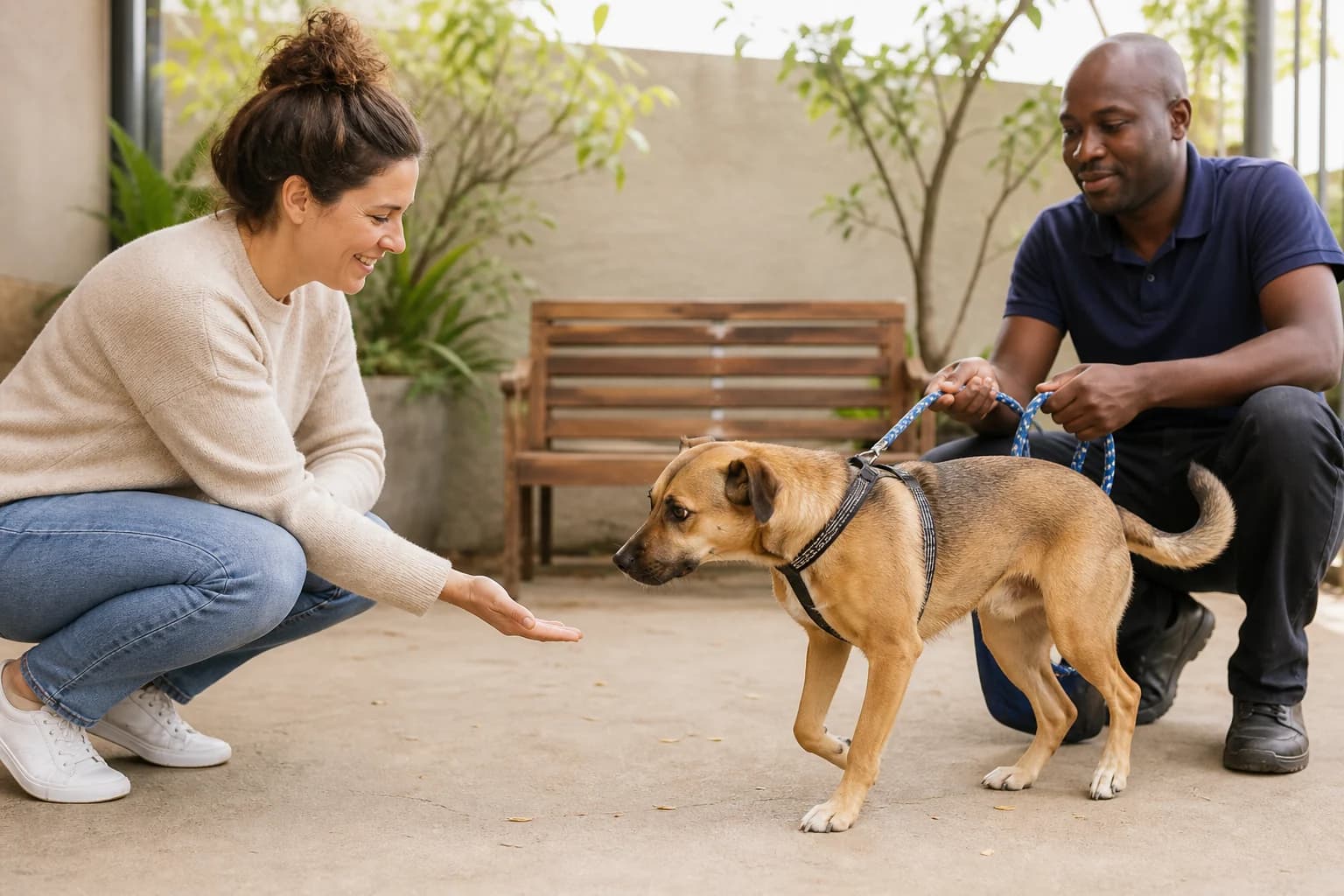
Meet-and-greets and behaviour history
Before adopting
- Obtain written landlord, complex, or body-corporate approval where required and check local rules.
- Confirm secure fencing, gates, pool safety, sleeping space, transport restraint, and a quiet settling area.
- Discuss every household member, child, resident dog, cat, and regular visitor with the rescue.
- Ask about energy, temperament, handling, toilet habits, separation distress, guarding, fear, reactivity, and bite history.
- Review medical history, vaccination records, sterilisation status or plan, parasite care, medicine, allergies, and microchip transfer.
- Understand the adoption fee, what it covers, contract terms, home-check process, collection, transport, trial options, support, and return process.
- Budget for food, routine and emergency veterinary care, grooming, training, insurance or savings, and local services.
- Prepare the first week and arrange time for a gradual transition rather than a celebration with many visitors.
Related reading
Contracts, fees, records, and microchips
First 24 hours at home
First week at home
- Keep meals, toilet breaks, sleep, walks, and quiet time predictable.
- Introduce family members calmly and teach children not to crowd, hug, wake, or disturb the dog while eating.
- Use barriers, leads, distance, and short controlled sessions for resident-pet introductions; do not force sharing.
- Feed pets separately and manage toys, beds, food, doorways, and other valued resources.
- Use secure identification and check microchip transfer details promptly.
- Book the recommended veterinary follow-up, especially when records are incomplete or symptoms appear.
- Record appetite, stool, urination, coughing, vomiting, scratching, pain, fear, guarding, escape attempts, and separation distress.
- Contact the rescue early if behaviour, safety, records, medication, or adjustment concerns emerge.