
Breed Guides
Best Dogs for Active Owners in South Africa
The best dog for an active owner is not automatically the highest-energy breed. A suitable companion can cope with the household's real weekday routine, learn safe public skills, recover calmly, and participate at an intensity appropriate for age, health, fitness, structure, and South African conditions. Breed type offers clues, but the individual dog and owner plan decide the fit.
Prepared by the Dog Haven Editorial Team using South African, veterinary, and official sources. Learn how we research and correct our guides.
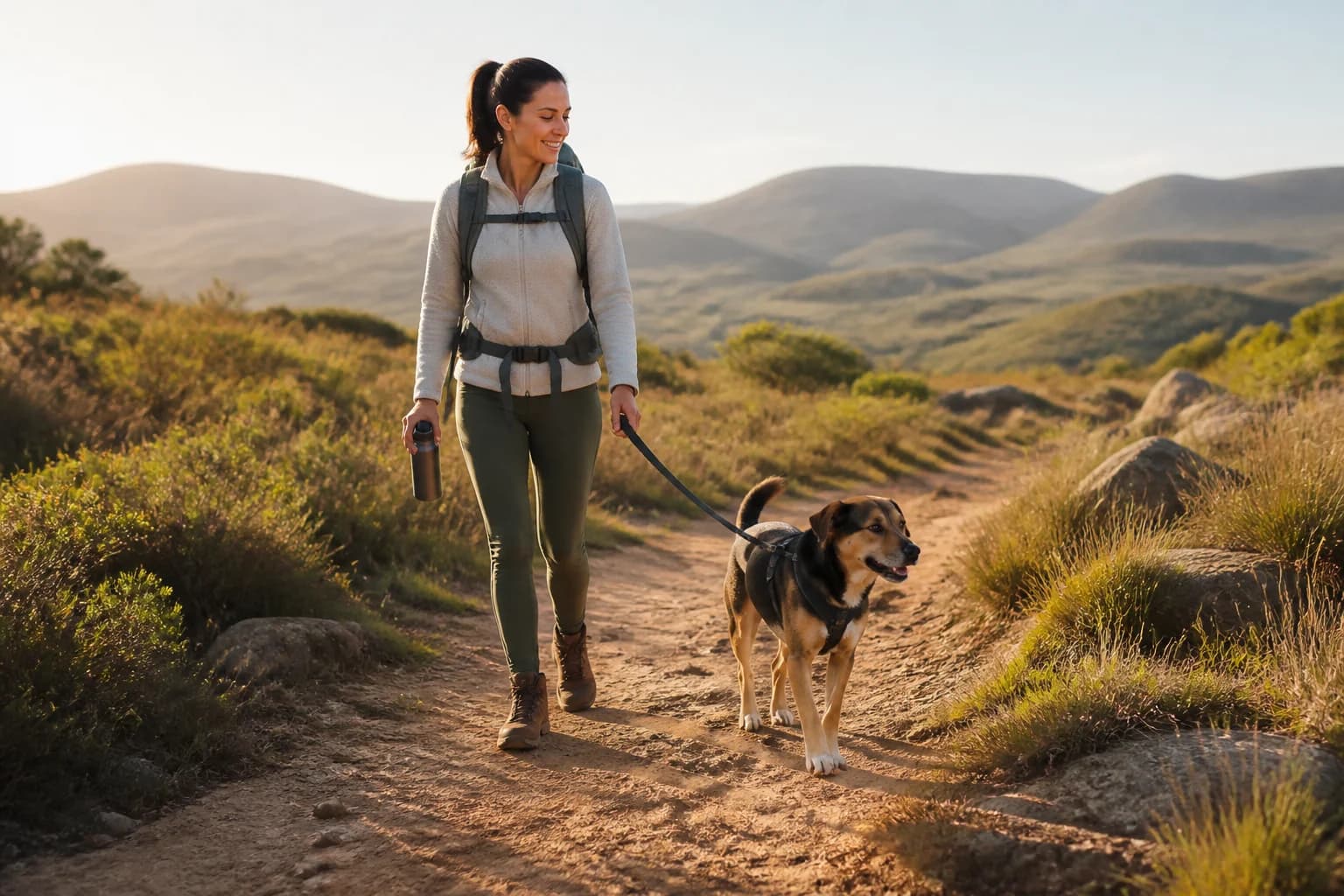
At a glance
Quick takeaways
What active ownership really requires
Match the lifestyle, not a ranked breed list
Lifestyle matching table
| Lifestyle | Traits that may help | Questions to ask yourself |
|---|---|---|
| Daily walking | Comfortable lead movement, moderate recovery, confidence around ordinary environments. | Can I walk consistently on weekdays and adapt for heat, illness, work pressure, and bad weather? |
| Running | Mature healthy body, gradual conditioning, manageable pace, focus, and suitable structure. | Has a veterinarian cleared this individual, and can I avoid heat and inappropriate repetitive impact? |
| Hiking | Endurance, secure control, recall foundations, stable feet, transport tolerance, and calm around trail users. | Can I manage water, ticks, snakes, wildlife, terrain, trail rules, emergencies, and the return distance? |
| Weekend adventures | Adaptability, calm travel, ability to rest away from home, and recovery after novelty. | What meaningful activity and enrichment will the dog receive during an ordinary working week? |
| Training sports | Motivation, focus, body awareness, resilience, and enjoyment of structured learning. | Do I have access to humane coaching, safe facilities, foundations, and time for gradual progression? |
| Active family home | Predictable temperament, suitable sociability, manageable arousal, and ability to settle around household life. | Can every family member follow the same safety, rest, child-interaction, and training routines? |
Age, growth, fitness, and health
South African trail and climate planning
Related reading
Training and public control
Before choosing an active companion
- Describe the actual weekly plan: distance, pace, terrain, travel, training, rest days, and indoor enrichment.
- Ask about the individual dog's age, health, body condition, joints, airway, gait, previous fitness, recovery, and veterinary history.
- Assess prey drive, recall foundations, lead skills, dog and human sociability, fear, escape history, and ability to settle.
- Plan for South African heat, humidity, ticks, snakes, grass seeds, hot surfaces, water, shade, and emergency access.
- Confirm trail, beach, park, estate, accommodation, transport, and public-control rules.
- Budget for suitable equipment, training, parasite prevention, food, transport, emergency care, and possible injury rehabilitation.
- Consider an adult rescue or mixed-breed dog whose observed behaviour and energy match the plan.