
Training
Puppy Training in South Africa
Training begins with safety, sleep, predictable routines and short moments of learning. A puppy does not need a packed timetable or harsh correction. They need household members to reward the same useful behaviours, prevent rehearsals of unwanted behaviour and introduce new people, animals, places and sounds at a pace the puppy can handle.
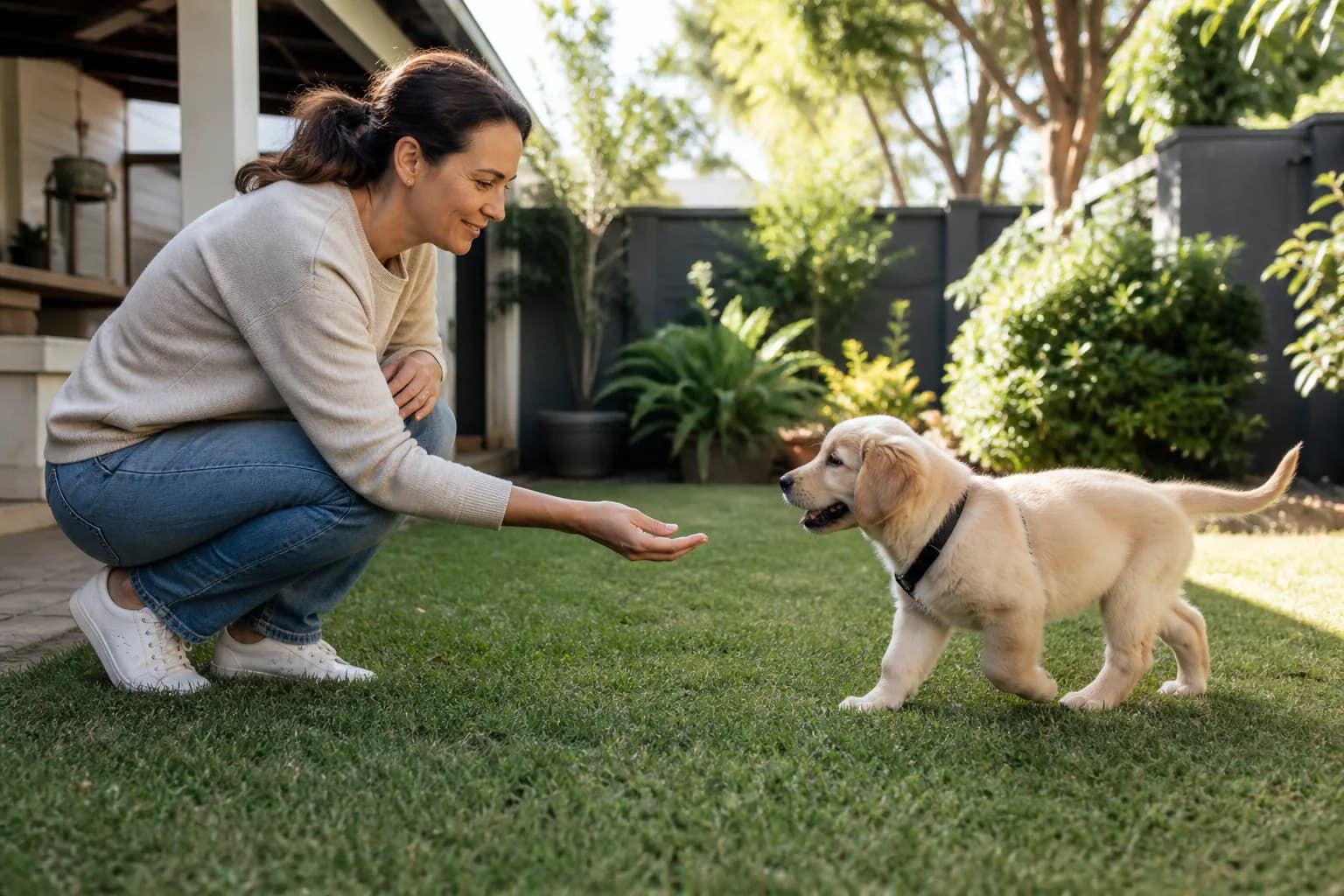
Quick takeaways
First two weeks of puppy training
- Book a veterinary check and confirm vaccination, parasite prevention, feeding and safe-exposure advice.
- Agree on the same cue words, toilet area, sleeping routine and household boundaries.
- Reward the puppy for looking at their name, approaching people, toileting in the chosen place and settling quietly.
- Provide safe chewing options and remove cables, medicines, toxic foods, plants and small swallowable objects.
- Practise brief, gentle handling of paws, ears, mouth, collar or harness, stopping if the puppy becomes worried.
- Introduce a lead and harness indoors or in a secure area before expecting a full walk.
- Plan calm exposure to everyday sounds, surfaces, people and safe dogs without forcing contact.
- Protect sleep. An overtired puppy often mouths, zooms, vocalises and struggles to learn.
Related reading
Core skills to practise
| Skill | What to practise | Common mistake |
|---|---|---|
| Name response | Say the name once and reward the puppy for turning towards you. | Repeating the name when the puppy is distracted or using it before something unpleasant. |
| Toilet routine | Offer frequent trips after sleep, food, play and excitement; reward in the chosen place. | Punishing accidents or giving unsupervised freedom too soon. |
| Recall foundations | Reward movement towards you over very short distances in a secure space. | Calling for something the puppy dislikes or testing recall around unsafe distractions. |
| Lead introduction | Reward wearing comfortable equipment and following a loose lead for a few steps. | Dragging the puppy, keeping constant tension or starting in a busy street. |
| Handling | Pair brief touch of paws, ears, mouth and body with rewards and release. | Holding the puppy down or continuing after avoidance and tension appear. |
| Mouthing | Redirect to a toy, pause play when teeth become too hard and provide rest. | Shouting, hitting the muzzle or exciting an already overtired puppy. |
| Calm behaviour | Quietly reward resting on a mat and watching household activity without joining it. | Giving attention only when the puppy jumps, barks or grabs clothing. |
Socialisation without forced greetings
Useful exposure lets the puppy notice people, vaccinated stable dogs, traffic, household sounds, surfaces, grooming tools, vehicles and new places while still able to eat, play, move away and recover. Distance is valuable. Watching a calm dog from across a space can teach more than being pulled into a greeting.
Ask your vet how to manage infectious-disease risk in your area while supporting early development. Choose clean, well-run environments and avoid high-traffic dog areas with unknown health status until your veterinarian advises they are appropriate. Never flood a frightened puppy by trapping them close to the trigger.
Related reading