DogHavenContact

Emergency Help

Dog Poisoning in South Africa: What Owners Should Do First

Poisoning can happen in ordinary South African homes: rat bait in a garage, human medication on a bedside table, slug pellets in a garden, chocolate at a braai, cannabis edibles, antifreeze, pesticides, or toxic plants. If you think your dog has eaten something dangerous, treat it as urgent and contact a veterinarian.

Last reviewed: 2026-05-13

Educational guide

This page is for general South African dog-owner education. It does not replace a veterinarian, qualified behaviour professional, insurer, or other relevant professional. For urgent symptoms or fast-worsening problems, contact a vet immediately.

Quick takeaways

  • Urgent summary: if poisoning is possible, phone a vet or emergency animal clinic immediately and do not wait for symptoms.
  • Take the product packaging, plant sample, medication name, or a clear photo with you if it is safe to do so.
  • Do not make your dog vomit, give milk, give oil, give charcoal, or use home remedies unless a veterinarian tells you to.
  • Small dogs, puppies, senior dogs, and dogs with existing illness can deteriorate quickly after toxic exposure.

Common poisoning risks in South African homes

The most useful first question is not whether the amount looked small. The useful question is: what exactly could your dog have eaten, when, and how much might be missing? Some toxins cause fast signs, while others look quiet at first and become serious later.

South African homes may have seasonal pest products, pool chemicals, garden treatments, human medicines, cannabis products, chocolate, xylitol sweeteners, grapes or raisins, and traditional or herbal products within reach. Rural properties and smallholdings can add livestock medicines, dips, fertilisers, and old containers in sheds.

Possible toxinWhy it matters
Rat bait or pesticidesSome products can affect bleeding, nerves, or organs and need fast veterinary assessment.
Human medicinePain tablets, antidepressants, heart medication, and diabetes medication can be dangerous to dogs.
Chocolate or xylitolChocolate can affect the heart and nervous system; xylitol can cause sudden low blood sugar and liver injury.
Grapes, raisins, or fruitcakeSome dogs develop kidney injury after exposure, and early care matters.
Pool, cleaning, or garage chemicalsCaustic or petroleum products can burn tissue or be aspirated if vomiting is induced.

Warning signs of poisoning

Signs depend on the toxin and may be delayed. A dog can look normal soon after exposure and still need care. If you know or suspect ingestion, phone a vet even before symptoms appear.

  • Vomiting, diarrhoea, drooling, gagging, or mouth irritation.
  • Weakness, wobbliness, tremors, seizures, collapse, or unusual sleepiness.
  • Pale gums, bruising, bleeding, coughing blood, or blood in stool or urine.
  • Fast breathing, trouble breathing, agitation, abnormal heart rate, or severe restlessness.
  • Refusing food, repeated swallowing, abdominal pain, or sudden behaviour change.

What to do now

Move your dog away from the substance and prevent other pets from reaching it. Call your vet or the nearest emergency animal clinic. Say what was eaten, when it happened, your dog's size, current symptoms, and whether the dog has vomited.

If safe, collect the label, packet, plant sample, or medication container. If your dog has a chemical on the coat or paws, ask the vet whether rinsing is appropriate before transport. Keep your dog calm and travel with another adult if possible.

  • Phone a vet immediately.
  • Identify the substance and amount if possible.
  • Keep packaging or a photo for the vet.
  • Keep your dog warm, calm, and supervised.
  • Do not wait for symptoms if exposure is likely.

What not to do

Avoid home treatment unless a veterinarian gives specific instructions for your dog and that toxin. Some common internet advice can make poisoning worse.

  • Do not induce vomiting unless a vet instructs you.
  • Do not give salt, oil, milk, raw eggs, alcohol, or herbal remedies.
  • Do not give activated charcoal from home supplies.
  • Do not assume a dog is safe because it vomited once.
  • Do not drive far past a closer emergency clinic without asking where the best care is available.

Prevention checklist

Poison prevention is mostly storage and habit. Dogs are curious, and many exposures happen when visitors, children, loadshedding routines, garden work, or holiday cooking disrupt normal supervision.

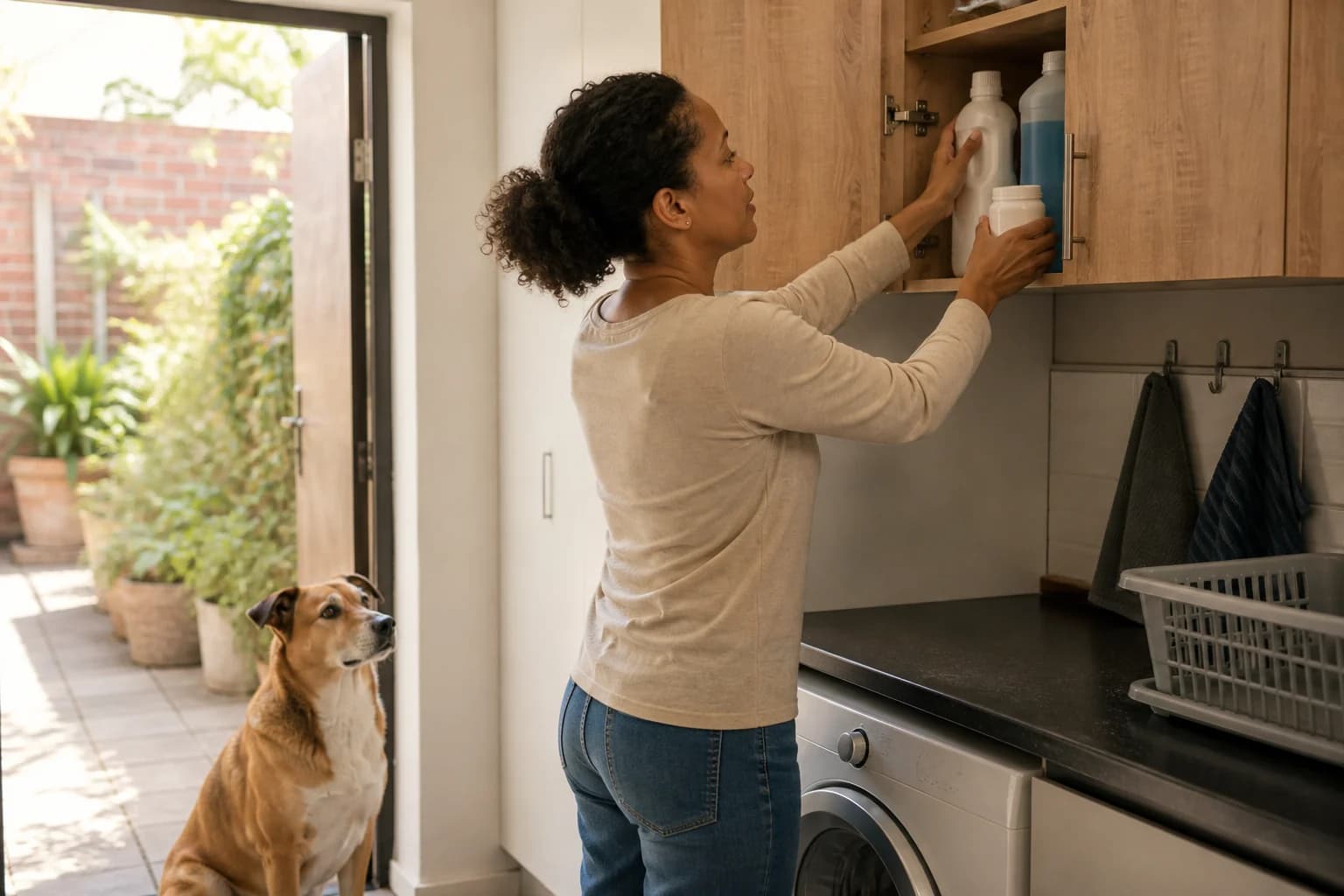
  • Store medicine, bait, pesticides, and pool chemicals behind closed doors or high shelves.
  • Use dog-safe pest control plans and ask professionals about pet risk before treatment.
  • Keep handbags, gym bags, and lunch boxes away from dogs.
  • Check garden products before use, especially snail bait and fertilisers.
  • Teach family members not to feed dogs chocolate, grapes, raisins, onion-heavy leftovers, or sugar-free sweets.

Frequently asked questions

Should I make my dog vomit after poisoning?

Not unless a veterinarian tells you to. Vomiting can be dangerous after caustic chemicals, petroleum products, seizures, weakness, breathing problems, or certain toxins.

What should I take to the vet?

Take the product packaging, medication name, plant sample, bait container, or a clear photo, plus your dog's weight and the time of possible exposure.

Can poisoning symptoms appear later?

Yes. Some toxins cause delayed kidney, liver, bleeding, or nervous system problems. Contact a vet when exposure is suspected, not only when symptoms are obvious.