
Dog Health
Ticks and Fleas on Dogs in South Africa
Ticks and fleas can affect South African dogs throughout the year, including in gardens, parks, long grass, farms, boarding facilities, holiday accommodation, and ordinary travel stops. A reliable routine combines the right species-specific product, hands-on checks, household control where needed, and fast veterinary advice when skin or illness signs appear.
Quick takeaways
Year-round risk with seasonal changes
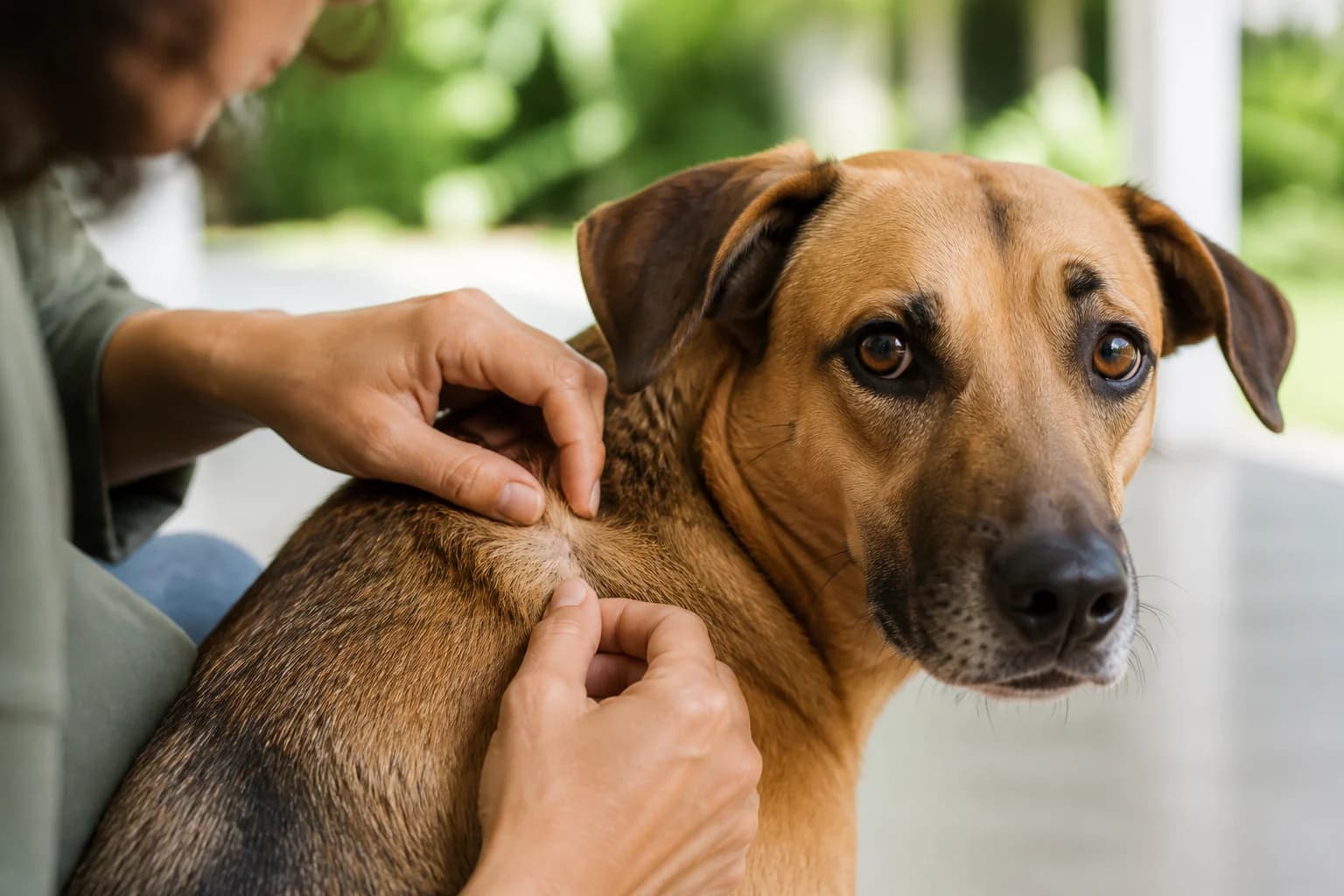
How to check a dog for ticks
A complete tick-check checklist
- Around and inside the outer ear flap, behind the ears, and along the head and jaw.
- Around the eyelids and muzzle without poking or squeezing sensitive tissue.
- Under the collar or harness, across the neck, and along the shoulders.
- Inside both armpits and along the chest.
- The belly, groin, inner thighs, and genital area.
- Between every toe, around the nail beds, and between the paw pads.
- The tail base, under the tail, and around the rear legs.
- Skin folds, lips, dense feathering, and any warm area hidden by long hair.
If you find a tick
Related reading
How to recognise possible fleas
Why one flea can mean a household problem
Choosing and using products safely
Match the situation to the next step
| Situation | What the owner may notice | Best next step |
|---|---|---|
| Tick found | An attached tick or a small inflamed bite area, with the dog otherwise well. | Remove safely or ask a vet for help, note the date, review prevention, and monitor for illness. |
| Fleas suspected | Fleas, flea dirt, scratching, chewing, or several pets becoming itchy. | Ask for species-appropriate treatment for every pet and start a safe household-control routine. |
| Skin irritation | Redness, hair loss, scabs, bad smell, pain, wet sores, or persistent itch. | Book a veterinary assessment because allergy, infection, mites, or another cause may need treatment. |
| Possible tick-borne illness | Weakness, pale gums, feverish behaviour, appetite loss, dark urine, collapse, or rapid decline. | Contact a vet urgently. Collapse, breathing difficulty, inability to stand, or rapid worsening is an emergency. |